
Testing Gilsonite-Modified Asphalt Binder in the Lab

Before using gilsonite on a paving project, the modified binder should be tested to confirm the target properties.
Sample preparation
Heat the base bitumen to 170–180°C, add the planned percentage of gilsonite powder and stir with a laboratory mixer until fully dissolved (usually 30–60 minutes). Check for undissolved particles on a glass slide.
Conventional tests
- Penetration at 25°C (ASTM D5 / EN 1426) – drops as gilsonite content rises
- Softening point (ASTM D36 / EN 1427) – rises with gilsonite content
- Rotational viscosity at 135°C (ASTM D4402) – confirms pumpability and helps set mixing temperature
- Ductility – usually decreases with higher gilsonite content
Performance-grade tests
- DSR on original and RTFO-aged binder for the high-temperature grade
- BBR on PAV-aged binder for the low-temperature grade
- MSCR for rutting resistance under heavy traffic
Building a dosage curve
Test at least three gilsonite contents (for example 4%, 8% and 12%) and plot softening point, penetration and PG high temperature against dosage. Select the lowest dosage that meets the specification.
Storage stability
Gilsonite dissolves in bitumen, so separation is normally low, but a storage stability (tube) test is still recommended for terminal blends.
Order lab samples of asphalt modifier grade gilsonite and read gilsonite and PG grades.
Recommended product
Asphalt Modifier Grade Gilsonite
| Property | Typical value | Test method |
|---|---|---|
| Appearance | Black powder or granules | Visual |
| Softening point (R&B) | 150 – 200 °C | ASTM D36 |
| Ash content, max | 8 % | ASTM D3174 |
| Moisture, max | 1 % | ASTM D95 |
| Solubility in TCE, min | 95 % | ASTM D2042 |
| Specific gravity @ 25°C | 1.04 – 1.10 | ASTM D70 |
| Particle size | Powder ≤ 200 mesh / granular 1–5 mm | Sieve |
| Typical dosage | 4 – 12 % by weight of binder | |
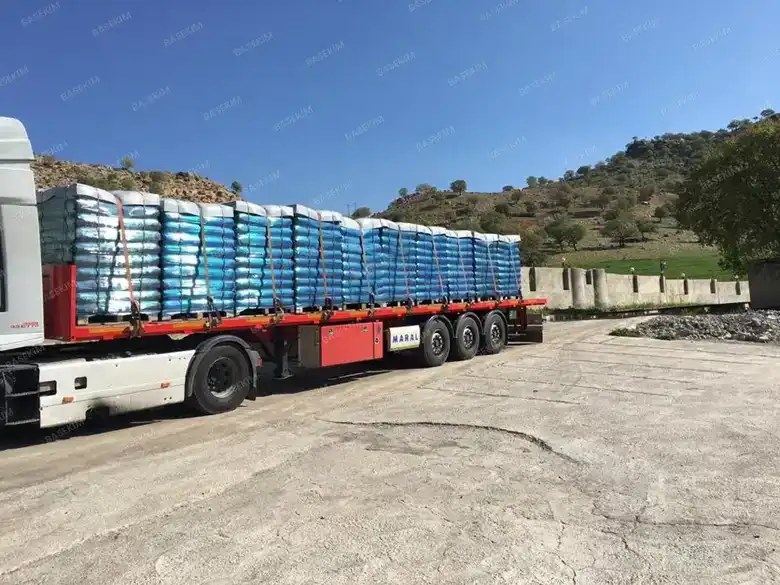
| Packing | 25 kg bags, meltable bags or 1 MT jumbo bags. | |
Typical values. The final specification is confirmed in the COA of each shipment.
Related articles

Fuel Resistance of Gilsonite-Modified Asphalt
Fuel and oil spills soften ordinary asphalt, causing ravelling and potholes at gas stations, bus depots and airports.…
Wet Process vs. Dry Process: Adding Gilsonite to Asphalt
There are two main ways to add gilsonite to asphalt mixtures. Each has advantages. Gilsonite powder is blended…
Gilsonite in Mastic Asphalt and Guss Asphalt
Mastic asphalt (also called guss asphalt) is a dense, void-free mix poured hot and used on bridge decks,…