
Gilsonite in Joint Sealants

Bituminous joint sealants fill expansion and contraction joints in concrete and asphalt.
Benefits of gilsonite
- Increased hardness and softening point
- Reduced flow in hot weather
- Good adhesion to joint faces
Typical uses
Concrete pavements, bridge joints, canals and reservoirs.
Where joints need sealing
- Concrete road and airfield pavements
- Bridge expansion joints (small movements)
- Canal and reservoir linings
- Industrial floors
Requirements
A joint sealant must stick to both joint faces, stretch when the joint opens in cold weather and resist flowing out when the joint closes in summer.
Gilsonite in hot-applied sealants
Gilsonite is blended with bitumen and rubber or polymers. It raises the softening point and hardness, reducing flow and tracking, while the polymer provides elasticity.
Installation steps
- Saw or rout the joint to the correct width and depth.
- Clean with compressed air and dry.
- Insert backer rod to control depth.
- Prime if required.
- Pour sealant to the specified level.
Recommended product
Sealer & Filler Grade Gilsonite
| Property | Typical value | Test method |
|---|---|---|
| Appearance | Black powder | Visual |
| Softening point (R&B) | 150 – 180 °C | ASTM D36 |
| Ash content, max | 5 % | ASTM D3174 |
| Moisture, max | 1 % | ASTM D95 |
| Solubility in toluene, min | 98 % | ASTM D2042 |
| Particle size | ≤ 200 mesh | Sieve |
| Typical dosage | Sealer: 15 – 35 % | |
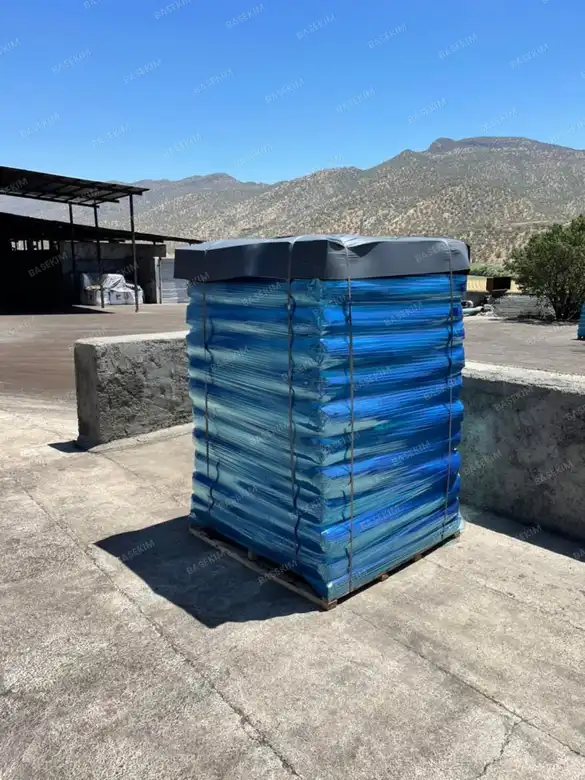
| Packing | 25 kg bags palletized. | |
Typical values. The final specification is confirmed in the COA of each shipment.
Related articles
Rejuvenating Aged Asphalt Surfaces
Asphalt oxidizes and becomes brittle and grey over time. Treat early, before cracking becomes extensive. Oxygen and UV…
Gilsonite in Cold Patch and Pothole Repair Mixes
Cold patch mixes repair potholes quickly without hot asphalt. Improves cohesion and stiffness after curing, helping patches stay…
When Is the Best Time for Crack Sealing?
Cracks are widest in cool weather, which makes spring and autumn ideal for crack sealing. Sealant placed in…