
Gilsonite in High-Solids and Lower-VOC Coatings
Regulations push coatings toward lower volatile organic compounds (VOC).
Challenges
Gilsonite needs solvent to dissolve, so formulators must balance solids and viscosity.
Approaches
- Use lower softening point grades for lower solution viscosity
- Combine with reactive diluents or oils
- Use gilsonite in emulsions (with emulsifiers)

Emulsions
Gilsonite can be blended into asphalt emulsions for water-based coatings.
Why VOC matters
Volatile organic compounds contribute to smog and are regulated in many regions. Coating manufacturers reduce VOC by increasing solids or switching to water-based systems.
Options with gilsonite
| Approach | Notes |
|---|---|
| Higher solids solvent coatings | Use lower softening point grades for lower viscosity |
| Emulsions | Gilsonite dissolved in bitumen, then emulsified |
| Hot-applied compounds | No solvent; applied hot |
Testing
Measure VOC by the relevant method and confirm drying, sag and film properties at the new solids level.
Recommended product
Ink & Paint Grade Gilsonite
| Property | Typical value | Test method |
|---|---|---|
| Appearance | Dark brown–black powder | Visual |
| Softening point (R&B) | 150 – 180 °C | ASTM D36 |
| Ash content, max | 3 % | ASTM D3174 |
| Moisture, max | 1 % | ASTM D95 |
| Solubility in toluene, min | 99 % | ASTM D2042 |
| Particle size | 200 – 600 mesh | Sieve |
| Typical dosage | Ink varnish: 20–40 % in oil | |
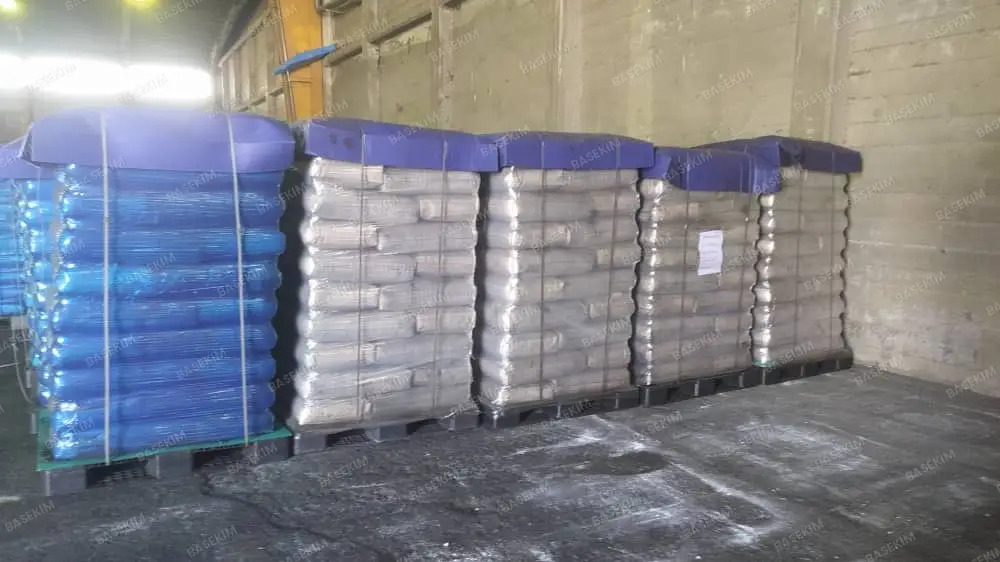
| Packing | 25 kg paper bags with PE liner, palletized. | |
Typical values. The final specification is confirmed in the COA of each shipment.
Related articles
Testing Gilsonite for Paint Applications
Before using a new gilsonite grade, test it in your formulation. Ash, softening point, moisture and particle size…

Gilsonite in Wood Stains and Preservatives
Gilsonite gives rich brown-to-black tones in wood stains and adds water repellence. Dilute gilsonite solutions give walnut and…
Gilsonite in Automotive Underbody Coatings
Vehicle underbodies face stones, water and road salt. Bituminous underbody coatings with gilsonite provide tough protection.