
What Is Gilsonite? A Complete Guide to Natural Asphalt

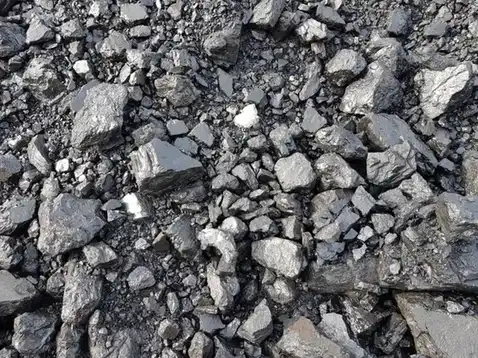
Gilsonite is a naturally occurring solid hydrocarbon — a shiny, black, brittle resin that looks a little like obsidian and breaks with a sharp, glassy fracture. Geologists also call it uintaite, asphaltite or simply natural asphalt. Unlike petroleum bitumen, which is made in a refinery from crude oil, gilsonite is formed in nature and is mined as a solid from vertical veins in the earth.
How gilsonite is different from bitumen
Petroleum bitumen is soft and sticky at room temperature. Gilsonite is the opposite: it is hard enough to be crushed and milled into a fine powder, yet it softens at high temperature (typically 150–220°C) and dissolves completely in aromatic solvents and in bitumen. This combination of hardness and solubility is what makes it so useful as an additive.
What gilsonite is made of
Chemically, gilsonite is rich in carbon (around 75–85%) with 8–10% hydrogen and small amounts of nitrogen, sulfur and oxygen. A large share of its molecules are polar “NSO” compounds, which give gilsonite excellent adhesion and wetting properties. It has very low moisture, low ash and a specific gravity close to water (about 1.05).

Main forms on the market
- Lump – run-of-mine pieces up to several centimetres, used for melting and blending. See our gilsonite lump grade.
- Granular – crushed and screened particles of 1–5 mm.
- Powder – milled to 100–200 mesh for drilling fluids, cementing and asphalt.
- Micronized – 300–600 mesh for inks, paints and coatings.
Where gilsonite is used
Gilsonite is used in more than 150 products. The biggest markets are oil and gas drilling (fluid loss control and shale stabilization), oil well cementing, asphalt paving, foundry sand, printing inks, paints, pipe coatings and waterproofing. You can read more in our article on the top 10 uses of gilsonite.
Why buyers choose natural asphalt
For formulators, gilsonite is a simple way to add hardness, gloss, adhesion and chemical resistance without synthetic resins or polymers. It is a natural material, consistent from lot to lot when properly graded, and cost-effective compared with many petrochemical alternatives.
Sun Gilsonite, a brand of BASEKIM, supplies every commercial form of gilsonite with full documentation — COA, TDS and MSDS — for each shipment.
Recommended product
Gilsonite Lump
| Property | Typical value | Test method |
|---|---|---|
| Appearance | Black, shiny lumps | Visual |
| Size | 0 – 50 mm (custom) | Sieve |
| Softening point (R&B) | 150 – 220 °C | ASTM D36 |
| Ash content, max | 5 – 10 % | ASTM D3174 |
| Moisture, max | 1 % | ASTM D95 |
| Volatile matter | 55 – 75 % | ASTM D3175 |
| Solubility in toluene, min | 95 % | ASTM D2042 |
| Specific gravity @ 25°C | 1.04 – 1.10 | ASTM D70 |
| Typical dosage | Depends on application. | |
| Packing | 1 MT jumbo bags or bulk; 20 MT per 20ft container. | |
Typical values. The final specification is confirmed in the COA of each shipment.
Related articles

Top 10 Uses of Gilsonite in Industry
Gilsonite appears in an impressive number of products. Here are the ten most important industrial uses. Fine gilsonite…

Understanding Mesh Sizes for Gilsonite Powder
"200 mesh" and "600 mesh" appear on almost every gilsonite specification. Here is what these numbers mean and…
How Gilsonite Is Mined and Processed
Gilsonite occurs in narrow vertical veins that cut through surrounding rock. These veins can be a few centimetres…