
Gilsonite Softening Point Explained

Softening point is the property that most clearly separates gilsonite from ordinary bitumen. It also helps decide which grade suits each application.
What softening point means
Gilsonite does not melt at a sharp temperature like ice. Instead, it gradually softens. The ring-and-ball softening point is the temperature at which a standard sample becomes soft enough to sag under a steel ball.
Typical range
Commercial gilsonite has softening points between 150°C and 220°C. Petroleum bitumen 60/70 softens at around 50°C.
Why it matters
- Asphalt: higher softening point gilsonite raises binder stiffness more strongly.
- Drilling fluids: the softening point should be near formation temperature so particles deform and seal.
- Coatings: lower softening point grades dissolve more easily.
- Foundry: affects the timing of gas release.
Selecting the right grade
For hot-climate paving and high-temperature wells, choose higher softening point material. For solvent-based paints and inks, a moderate softening point gives easier processing.
Testing
Softening point is measured according to ASTM D36 on every lot of Sun Gilsonite powder. Also read physical properties of gilsonite.
Recommended product
Gilsonite Powder
| Property | Typical value | Test method |
|---|---|---|
| Appearance | Black to dark brown powder | Visual |
| Particle size | 100 – 200 mesh | Sieve |
| Softening point (R&B) | 150 – 220 °C | ASTM D36 |
| Ash content, max | 5 % | ASTM D3174 |
| Moisture, max | 1 % | ASTM D95 |
| Volatile matter | 55 – 75 % | ASTM D3175 |
| Solubility in toluene, min | 99 % | ASTM D2042 |
| Specific gravity @ 25°C | 1.04 – 1.10 | ASTM D70 |
| Typical dosage | Drilling 2–8 lb/bbl · asphalt 4–12 % of binder · foundry 0.3–1.0 % | |
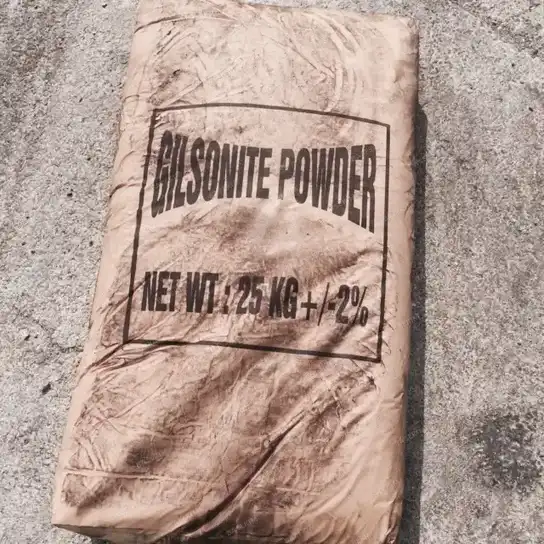
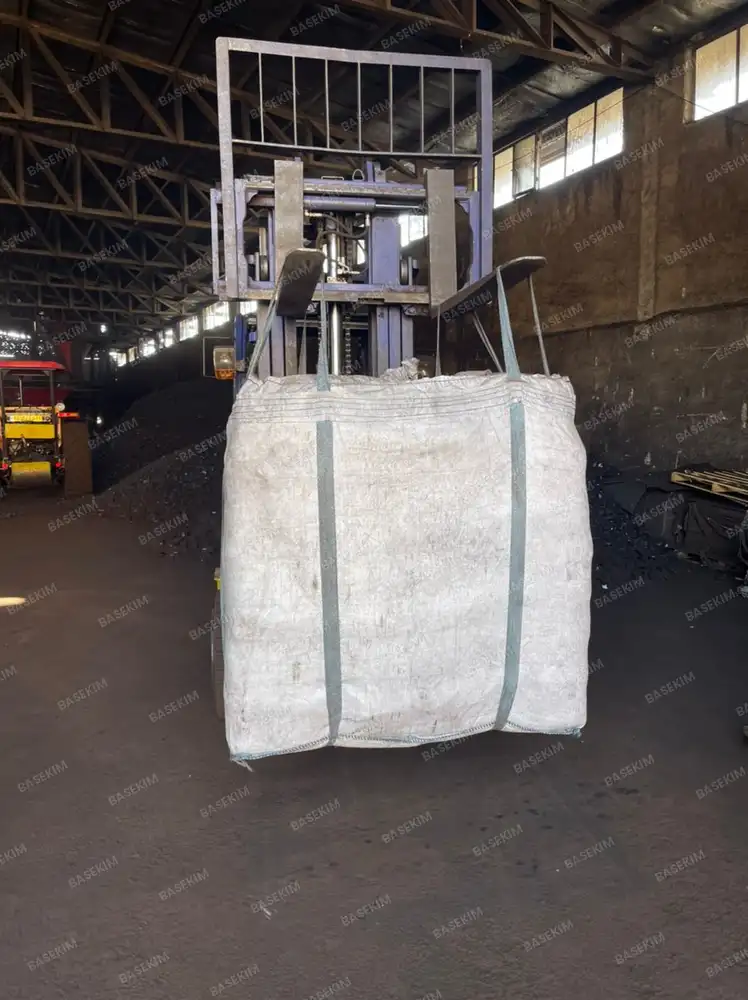
| Packing | 25 kg multi-wall paper or PP bags, palletized and stretch-wrapped; 1 MT jumbo bags. | |
Typical values. The final specification is confirmed in the COA of each shipment.
Related articles

Top 10 Uses of Gilsonite in Industry
Gilsonite appears in an impressive number of products. Here are the ten most important industrial uses. Fine gilsonite…

Shipping Gilsonite by Container and Truck
Gilsonite is shipped around the world by sea container, flatbed truck and bulk vessel. Good logistics planning saves…
The History of Gilsonite: From Discovery to Industry
Gilsonite has a surprisingly long history. Natural asphalts have been used for thousands of years — ancient builders…