
Foundry Emissions and Carbon Additives

Foundries are under pressure to reduce smoke, odour and emissions. The choice of carbon additive matters.
Sources of emissions
When hot metal meets green sand, carbon additives release volatile organic compounds and smoke.
Gilsonite’s role
Because gilsonite works at lower dosages than many coal additives, the total amount of carbon in the sand can be reduced. Lower dosage can mean less smoke per tonne of castings.

Other measures
- Optimize additive levels using LOI control
- Improve ventilation and capture at pouring and shake-out
- Consider hybrid additives
Measuring improvement
Track smoke opacity, odour complaints and emissions tests before and after changes.
Main emission points
- Pouring
- Cooling lines
- Shake-out
- Sand handling
Strategies
| Strategy | Effect |
|---|---|
| Optimise additive dosage | Less material to burn |
| Better extraction hoods | Capture emissions |
| Enclosed cooling | Contain fumes |
| Regular LOI control | Avoid overdosing |
Practical tip
Many foundries overdose carbon “to be safe”. Systematic LOI control usually reveals room to reduce additions without hurting quality.
Recommended product
Foundry Grade Gilsonite
| Property | Typical value | Test method |
|---|---|---|
| Appearance | Black powder | Visual |
| Particle size | 100 – 300 mesh | Sieve |
| Volatile matter | 55 – 75 % | ASTM D3175 |
| Ash content, max | 5 % | ASTM D3174 |
| Moisture, max | 1 % | ASTM D95 |
| Softening point (R&B) | 150 – 200 °C | ASTM D36 |
| Typical dosage | 0.3 – 1.0 % (iron) | |
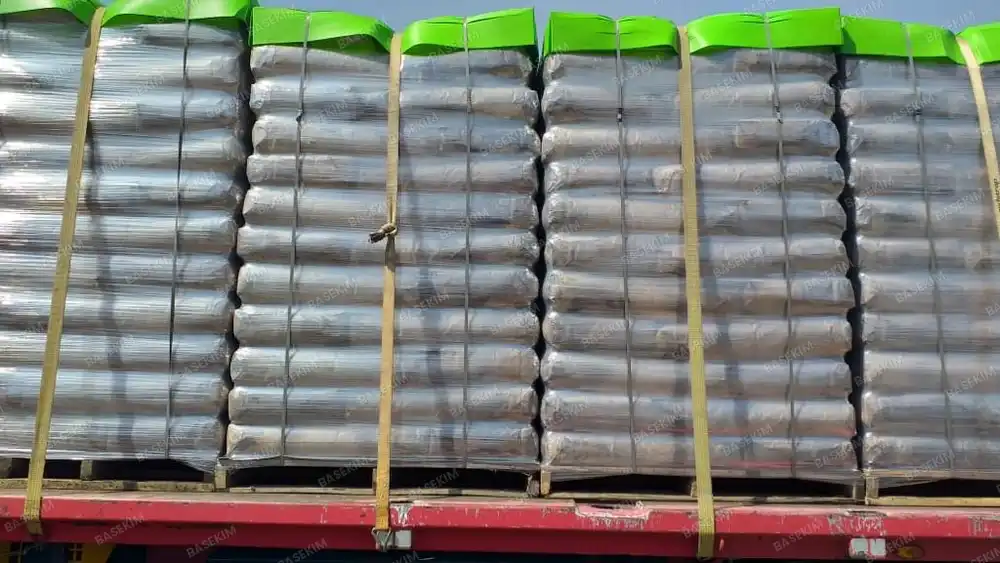
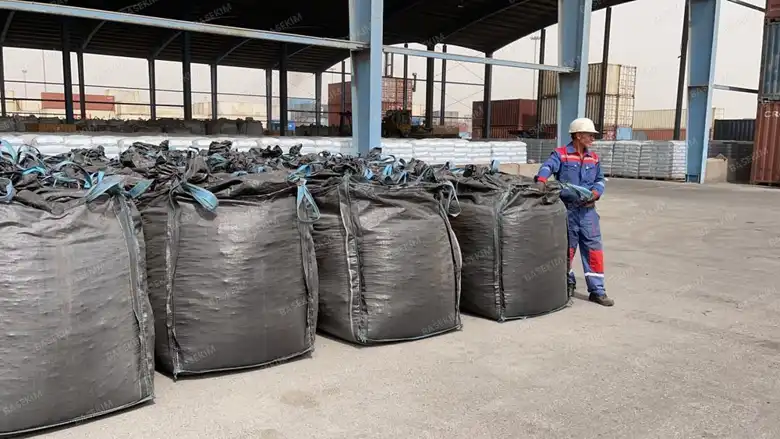
| Packing | 25 kg bags palletized; 1 MT jumbo bags for blending plants. | |
Typical values. The final specification is confirmed in the COA of each shipment.
Related articles
Choosing Foundry Gilsonite Grades
Foundry gilsonite is offered in several particle sizes. Each suits a different need. For precision castings and fine…
Gilsonite and Common Casting Defects
Carbon additives affect several casting defects. Getting the level right is key. Monitor LOI, volatile content and casting…
Loss on Ignition (LOI) in Green Sand and Gilsonite
Loss on ignition is a simple test that tells you how much combustible material is in your sand.…