
Loss on Ignition (LOI) in Green Sand and Gilsonite
Loss on ignition is a simple test that tells you how much combustible material is in your sand. It is essential for controlling carbon additives.
What LOI measures
A dried sand sample is heated to about 1000°C. The weight loss represents carbon additives, organic binders and other combustibles.
Typical LOI levels
Most iron foundries keep LOI between 2% and 5%, depending on casting type.

Too high
- Excess gas, causing blowholes
- Lustrous carbon defects
- Smoke and odour
Too low
- Burn-on and penetration
- Poor surface finish
Using gilsonite
Because gilsonite has high volatile matter and low ash, it adds active carbon without as much inert build-up. Track LOI alongside volatile content.
How to measure LOI
- Take a representative sample of prepared sand.
- Dry at about 105 °C to remove moisture.
- Weigh, then heat at about 1,000 °C until constant weight.
- LOI = weight loss / dry weight × 100 %.
LOI vs. volatiles
LOI includes all combustible matter (fresh additive, burned residues, core binders). Volatile content (measured at lower temperature without air) better reflects the active additive. Track both for good control.
Control chart
Plot daily LOI and volatiles against casting defects. Patterns quickly show when additions need adjustment.
Recommended product
Foundry Grade Gilsonite
| Property | Typical value | Test method |
|---|---|---|
| Appearance | Black powder | Visual |
| Particle size | 100 – 300 mesh | Sieve |
| Volatile matter | 55 – 75 % | ASTM D3175 |
| Ash content, max | 5 % | ASTM D3174 |
| Moisture, max | 1 % | ASTM D95 |
| Softening point (R&B) | 150 – 200 °C | ASTM D36 |
| Typical dosage | 0.3 – 1.0 % (iron) | |
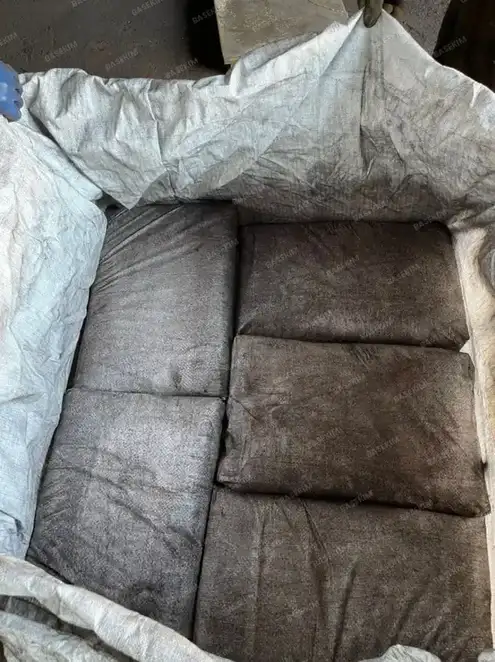
| Packing | 25 kg bags palletized; 1 MT jumbo bags for blending plants. | |
Typical values. The final specification is confirmed in the COA of each shipment.
Related articles
Bentonite and Gilsonite Blends for Green Sand
Many foundries buy pre-mixed blends of bentonite and carbon additives. Gilsonite is an excellent carbon component for these…
Gilsonite vs. Sea Coal in Green Sand
Sea coal (finely ground bituminous coal) has been the traditional carbon additive in green sand for over a…

Gilsonite in Foundry Sand: How It Works
Green sand moulding is the most common way to make iron castings. Carbonaceous additives are added to the…