
Gilsonite in Foundry Sand: How It Works

Green sand moulding is the most common way to make iron castings. Carbonaceous additives are added to the sand to improve the surface finish of castings, and gilsonite is one of the most effective.
The role of carbon additives
When molten metal is poured into a green sand mould, the additive heats up and releases gases and hydrocarbons. These form a thin layer of lustrous carbon at the mould–metal interface. This layer prevents the metal from wetting and penetrating the sand.
Why gilsonite
- High volatile matter releases plenty of gas
- High lustrous carbon yield
- Low ash and low sulfur compared with many coal dusts
- Lower dosage than traditional sea coal

Benefits for castings
- Smoother surface finish
- Easier shake-out and cleaning
- Fewer burn-on and penetration defects
- Better dimensional accuracy
Typical dosage
0.3–1.0% for iron castings.
What happens at the mould surface
When molten iron at around 1,400 °C meets green sand, the carbon additive heats almost instantly. Volatile hydrocarbons are released and crack in the oxygen-poor atmosphere of the mould. Carbon deposits as a thin, shiny layer on sand grains next to the metal. Molten iron does not wet this layer, so it does not penetrate between sand grains.
Key properties of foundry gilsonite
| Property | Why it matters |
|---|---|
| High volatile matter | Plenty of gas to form lustrous carbon |
| High lustrous carbon yield | Effective at low dosage |
| Low ash | Less dead material in the sand system |
| Controlled particle size | Even distribution in sand |
Practical results foundries look for
Cleaner castings, less shot-blasting, easier shake-out and more stable sand properties.
See our foundry grade gilsonite and read gilsonite vs. sea coal.
Recommended product
Foundry Grade Gilsonite
| Property | Typical value | Test method |
|---|---|---|
| Appearance | Black powder | Visual |
| Particle size | 100 – 300 mesh | Sieve |
| Volatile matter | 55 – 75 % | ASTM D3175 |
| Ash content, max | 5 % | ASTM D3174 |
| Moisture, max | 1 % | ASTM D95 |
| Softening point (R&B) | 150 – 200 °C | ASTM D36 |
| Typical dosage | 0.3 – 1.0 % (iron) | |
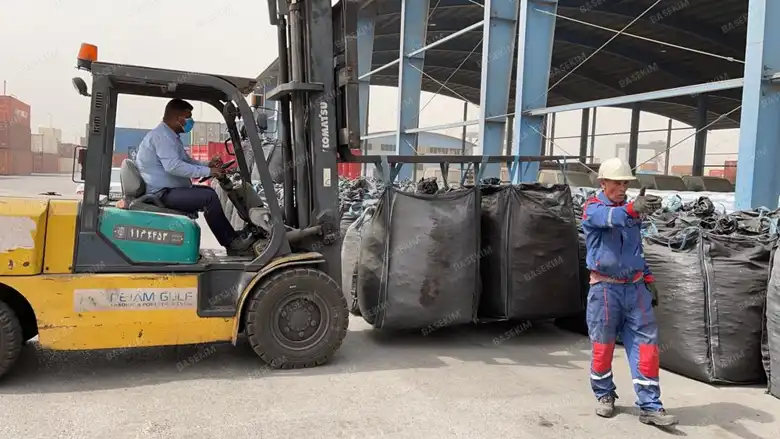
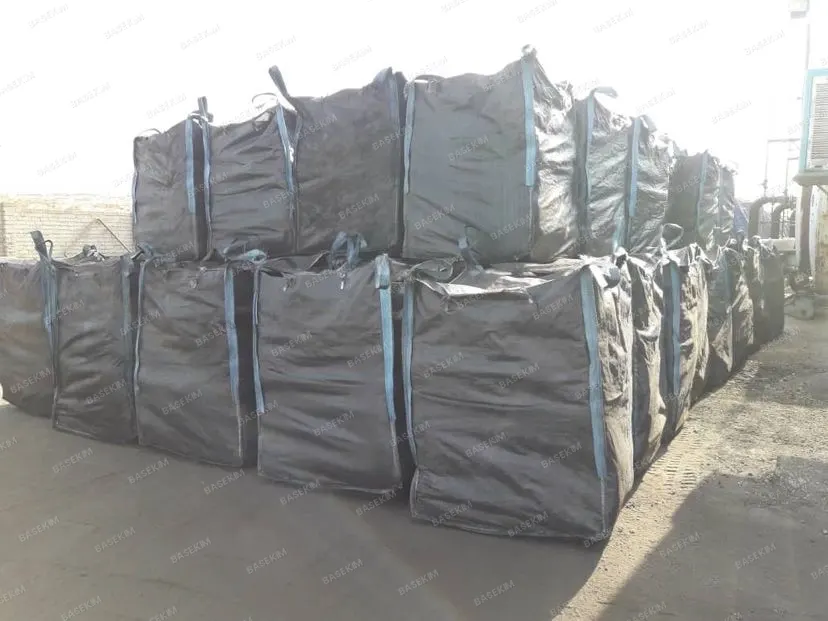
| Packing | 25 kg bags palletized; 1 MT jumbo bags for blending plants. | |
Typical values. The final specification is confirmed in the COA of each shipment.
Related articles

Gilsonite in Non-Ferrous Castings
Aluminium, copper and brass castings are poured at lower temperatures than iron, so less carbon additive is needed.…
Lustrous Carbon Explained: Why It Matters for Castings
Lustrous carbon is a thin, shiny graphite-like film that forms on the mould surface when hydrocarbons crack at…
Bentonite and Gilsonite Blends for Green Sand
Many foundries buy pre-mixed blends of bentonite and carbon additives. Gilsonite is an excellent carbon component for these…