
Testing Gilsonite in the Mud Laboratory
Before a field trial, laboratory testing confirms that a gilsonite grade suits your fluid and well conditions.
Basic tests
- Rheology (API RP 13B) before and after addition
- API fluid loss at room temperature
- HPHT fluid loss at bottom-hole temperature
- Hot rolling to simulate circulation
Shale tests
- Linear swell tests
- Shale dispersion (cuttings recovery)
- Pore pressure transmission tests

Particle size and softening point
Confirm that the grade’s particle size distribution and softening point match the specification.
Interpreting results
A good gilsonite treatment lowers HPHT fluid loss, gives thin firm filter cakes and improves shale recovery, without unacceptable rheology changes.
Example test matrix
| Sample | Gilsonite | Test temperature |
|---|---|---|
| Base mud | 0 lb/bbl | BHT |
| A | 4 lb/bbl, grade 1 | BHT |
| B | 4 lb/bbl, grade 2 | BHT |
| C | 6 lb/bbl, best grade | BHT |
Reporting
Report rheology, API and HPHT filtrate, cake thickness and shale results in one table to compare options easily.
Sample request
Sun Gilsonite can send samples of drilling grade gilsonite and sulphonated asphalt for testing. See HPHT fluid loss control.
Recommended product
Drilling Fluid Grade Gilsonite
| Property | Typical value | Test method |
|---|---|---|
| Appearance | Black, shiny powder | Visual |
| Softening point (R&B) | 160 – 220 °C (grades) | ASTM D36 |
| Ash content | 3 – 8 % | ASTM D3174 |
| Solubility in TCE | 95 – 99 % | ASTM D2042 |
| Specific gravity @ 25°C | 1.04 – 1.06 | ASTM D70 |
| Moisture, max | 1 % | ASTM D95 |
| Particle size | 75 – 200 µm | Sieve |
| Typical dosage | 2 – 8 lb/bbl | |
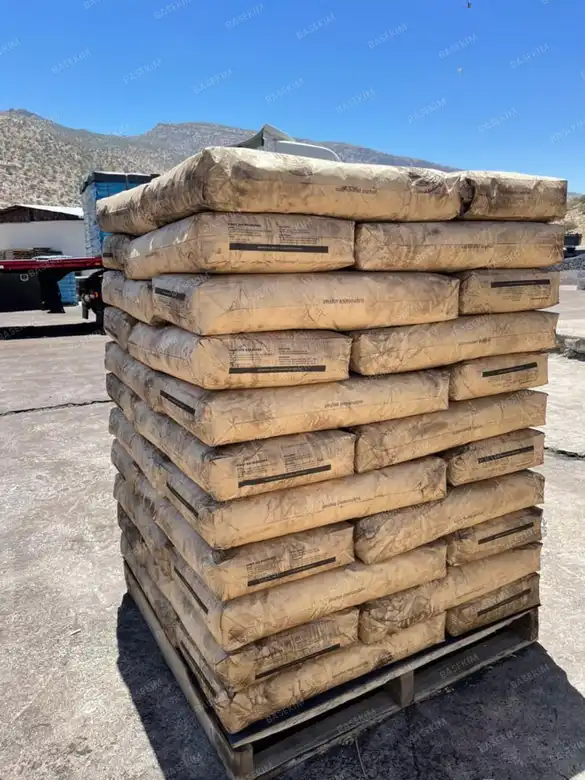
| Packing | 25 kg (50 lb) bags palletized; 1 MT jumbo bags. | |
Typical values. The final specification is confirmed in the COA of each shipment.
Related articles
Sulphonated Asphalt vs. Gilsonite: Which Suits Your Mud?
Both sulphonated asphalt and gilsonite are asphaltic shale stabilizers, but they behave differently in drilling fluids. Natural, hard…
Gilsonite as a Mud Additive: Frequently Asked Questions
Does gilsonite work in water-based mud? Yes, especially with surfactants. For easy mixing in water, sulphonated asphalt is…
Preventing Differential Sticking with Gilsonite
Differential sticking happens when the drill string is pressed into a thick filter cake by the pressure difference…