
Bituminous Linings for Tanks and Reservoirs
Water tanks, canals and reservoirs can be lined with bituminous materials.
Benefits
- Economical
- Seamless coatings
- Good adhesion to concrete
Notes
For potable water, use materials with appropriate certification.

Where bituminous linings are used
- Concrete water tanks (non-potable)
- Irrigation canals and reservoirs
- Fire-water tanks
- Wastewater structures
Application tips
- Concrete must be cured and dry before coating.
- Use a primer to penetrate and seal the surface.
- Apply at least two coats to avoid pinholes.
- Pay special attention to joints, corners and pipe penetrations.
Benefits of gilsonite
A gilsonite-modified lining is harder and more resistant to abrasion from water flow and debris. Its low water absorption and good adhesion help the lining stay intact through repeated filling and emptying.
Important note
Linings in contact with drinking water must be certified for potable water by the relevant authority. Standard bituminous products are not automatically suitable.
Recommended product
Coating & Waterproofing Grade Gilsonite
| Property | Typical value | Test method |
|---|---|---|
| Appearance | Black powder | Visual |
| Softening point (R&B) | 150 – 200 °C | ASTM D36 |
| Ash content, max | 5 % | ASTM D3174 |
| Moisture, max | 1 % | ASTM D95 |
| Solubility in TCE, min | 97 % | ASTM D2042 |
| Particle size | ≤ 200 mesh | Sieve |
| Typical dosage | 5 – 25 % of compound | |
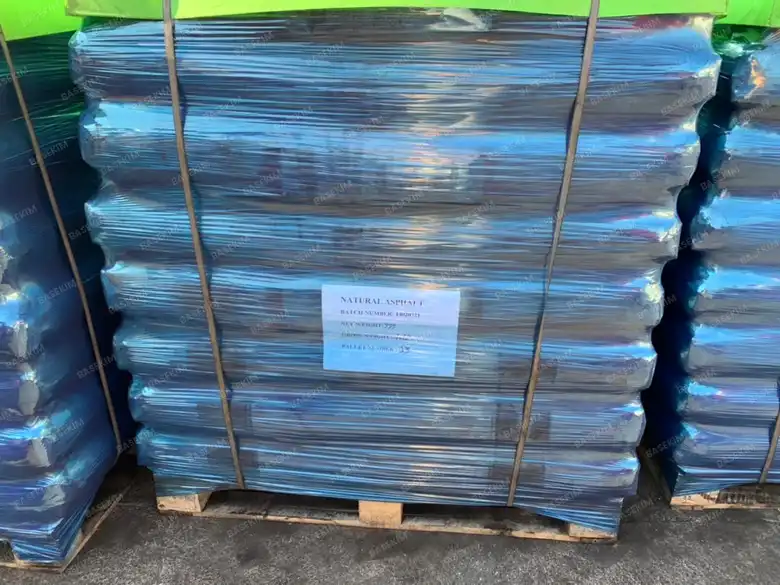
| Packing | 25 kg bags palletized; 1 MT jumbo bags. | |
Typical values. The final specification is confirmed in the COA of each shipment.
Related articles

Green Roofs and Bituminous Root Barriers
Green roofs need waterproofing that resists roots. Root-resistant membranes with special additives. Can contribute to hardness of compounds;…
Gilsonite Waterproofing FAQ
Why add gilsonite to waterproofing? To increase hardness, heat resistance and water resistance. Is it flexible? Alone it…
Waterproofing in Hot Climates
Extreme heat softens bitumen, causing slipping on slopes and stickiness. Gilsonite raises softening point so coatings stay in…