
Gilsonite for Heavy-Section Castings

Large castings — machine bases, mill parts, counterweights — remain hot for a long time, increasing the risk of penetration and burn-on.
Challenges
- Long contact time between hot metal and sand
- High metallostatic pressure
- Sand expansion defects
Solutions
- Higher carbon additive levels near heavy sections
- Refractory coatings
- Facing sand with extra gilsonite
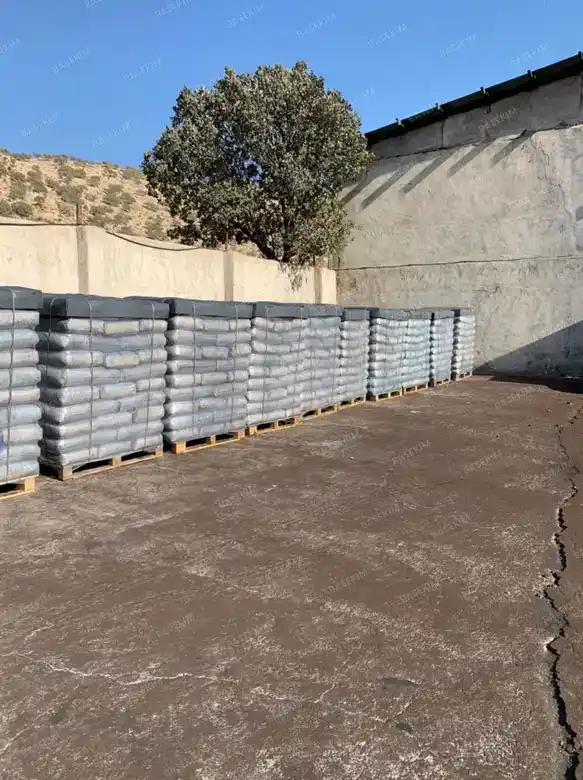
Facing sand
Some foundries use a facing sand with higher gilsonite content against the pattern, backed by ordinary system sand.
Design and process measures
| Measure | Benefit |
|---|---|
| Facing sand with extra gilsonite | Better surface at critical areas |
| Refractory coatings | Barrier against penetration |
| Chills | Faster local solidification |
| Higher mould hardness | Less metal penetration |
Cooling time
Heavy castings need longer cooling, which also means longer exposure of sand to heat. Plan shake-out timing carefully.
See foundry grade gilsonite. Related: reducing burn-on.
Recommended product
Foundry Grade Gilsonite
| Property | Typical value | Test method |
|---|---|---|
| Appearance | Black powder | Visual |
| Particle size | 100 – 300 mesh | Sieve |
| Volatile matter | 55 – 75 % | ASTM D3175 |
| Ash content, max | 5 % | ASTM D3174 |
| Moisture, max | 1 % | ASTM D95 |
| Softening point (R&B) | 150 – 200 °C | ASTM D36 |
| Typical dosage | 0.3 – 1.0 % (iron) | |
| Packing | 25 kg bags palletized; 1 MT jumbo bags for blending plants. | |
Typical values. The final specification is confirmed in the COA of each shipment.
Related articles

How to Improve Casting Surface Finish
A smooth as-cast surface reduces machining, grinding and blasting time. These are the main levers. Finer sand gives…
Carbon Additives for Automotive Castings
Engine blocks, cylinder heads, brake drums and discs are high-volume, high-quality castings. Foundries serving the automotive industry need…
Formulating Facing Sand with Gilsonite
Facing sand is a richer sand mixture placed directly against the pattern to give a better casting surface.…