
Gilsonite Asphalt for Intersections and Bus Lanes

Intersections and bus lanes are where pavements fail first. Braking, accelerating and stopped heavy vehicles cause rutting and shoving.
Why these areas are critical
- Slow and stationary loads
- High shear from braking and turning
- Concentrated wheel paths
How gilsonite helps
Gilsonite stiffens the binder so the mix resists deformation under slow, heavy loads.
Design approach
- Use a stone-on-stone gradation (e.g., SMA or coarse dense mix).
- Add 8–12% gilsonite by weight of binder.
- Ensure good compaction.
Maintenance savings
Fewer rut repairs mean less disruption to traffic and public transport.
Why ordinary mixes fail at intersections
At signals, heavy vehicles stop and start repeatedly. Braking forces push the mix forward (shoving), and stationary loads cause deep ruts, especially in summer.
Material selection
| Element | Recommendation |
|---|---|
| Binder | Gilsonite-modified, higher PG |
| Aggregate | Crushed, angular, stone-on-stone skeleton |
| Mix type | SMA or coarse dense-graded |
| Layer thickness | Adequate for traffic |
Construction tips
Compact thoroughly and avoid opening to traffic before the mat has cooled enough.
Use our asphalt modifier gilsonite. Also read improving rutting resistance.
Recommended product
Asphalt Modifier Grade Gilsonite
| Property | Typical value | Test method |
|---|---|---|
| Appearance | Black powder or granules | Visual |
| Softening point (R&B) | 150 – 200 °C | ASTM D36 |
| Ash content, max | 8 % | ASTM D3174 |
| Moisture, max | 1 % | ASTM D95 |
| Solubility in TCE, min | 95 % | ASTM D2042 |
| Specific gravity @ 25°C | 1.04 – 1.10 | ASTM D70 |
| Particle size | Powder ≤ 200 mesh / granular 1–5 mm | Sieve |
| Typical dosage | 4 – 12 % by weight of binder | |
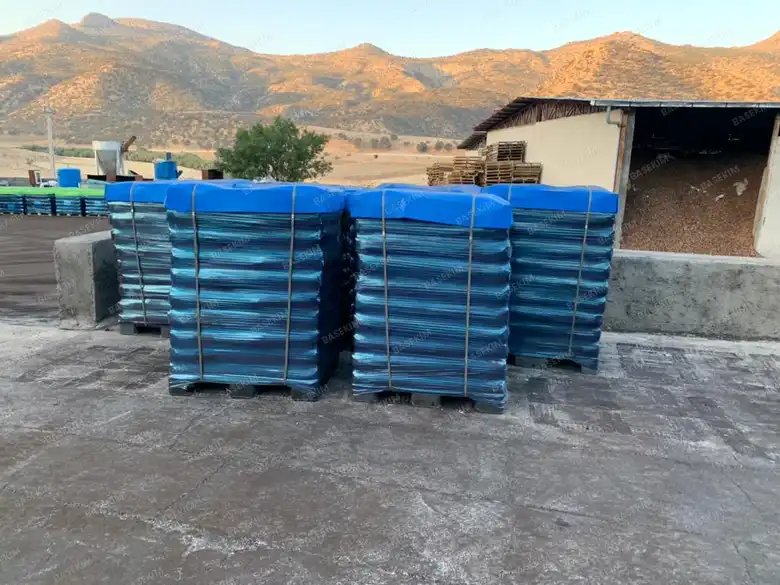
| Packing | 25 kg bags, meltable bags or 1 MT jumbo bags. | |
Typical values. The final specification is confirmed in the COA of each shipment.
Related articles
Rehabilitation Overlays with Gilsonite Asphalt
When a road reaches the end of its surface life, an overlay restores ride quality and structure. Gilsonite…
Gilsonite in Base and Binder Courses
Much of the rutting in heavy-duty pavements occurs in the lower asphalt layers, not just the surface. Modifying…
Gilsonite for Parking Lots and Driveways
Parking lots and driveways suffer from oil drips, sun exposure and turning tires. Gilsonite helps in both the…