
Veining Defects and the Role of Additives
Veining appears as thin fins of metal on casting surfaces, usually on cores. It is caused by sand expansion and cracking.
Causes
- Silica sand expansion at about 573°C
- Rigid cores that crack under heat
Additive solutions
- Iron oxide or special anti-veining additives
- Carbonaceous additives that burn out and give space for expansion
- Finer sand blends

Gilsonite’s contribution
In some core systems, a small amount of gilsonite provides cushioning as it volatilizes. Results depend on the binder system and should be tested.
Typical locations
Veining usually appears on internal surfaces formed by cores, especially in iron castings with thick sections.
Remedies
| Remedy | Mechanism |
|---|---|
| Anti-veining additives | Absorb expansion |
| Finer or blended sands | Reduce expansion stress |
| Coatings | Block metal entry into cracks |
| Carbon additives | Possible cushioning effect |
Trial approach
Change one factor at a time and inspect sectioned castings.
See foundry grade gilsonite. Related: gilsonite in core sand.
Recommended product
Foundry Grade Gilsonite
| Property | Typical value | Test method |
|---|---|---|
| Appearance | Black powder | Visual |
| Particle size | 100 – 300 mesh | Sieve |
| Volatile matter | 55 – 75 % | ASTM D3175 |
| Ash content, max | 5 % | ASTM D3174 |
| Moisture, max | 1 % | ASTM D95 |
| Softening point (R&B) | 150 – 200 °C | ASTM D36 |
| Typical dosage | 0.3 – 1.0 % (iron) | |
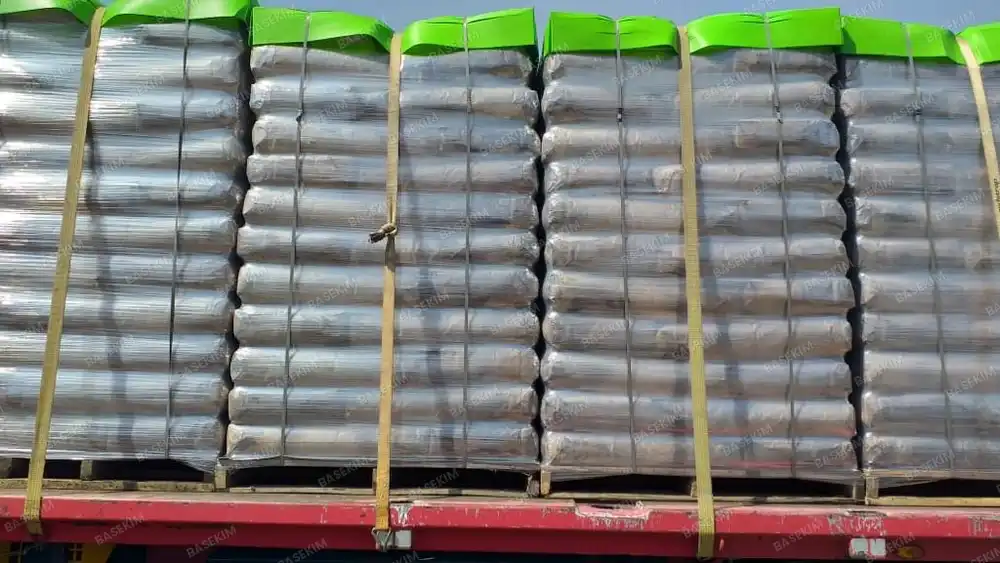
| Packing | 25 kg bags palletized; 1 MT jumbo bags for blending plants. | |
Typical values. The final specification is confirmed in the COA of each shipment.
Related articles

Better Shake-Out with Carbon Additives
Shake-out is where castings are separated from their moulds. Sand that sticks to castings slows production and increases…

Casting and Carbon Additives: FAQ
Why add carbon to green sand? To create lustrous carbon and a reducing atmosphere that improves surface finish.…

Gilsonite for Heavy-Section Castings
Large castings — machine bases, mill parts, counterweights — remain hot for a long time, increasing the risk…