
Gilsonite and Common Casting Defects
Translate this article:
Carbon additives affect several casting defects. Getting the level right is key.
Defects reduced by gilsonite
- Burn-on / burn-in – rough sand adhering to the surface
- Metal penetration
- Scabs and rat-tails – related to sand expansion; carbon additives help cushion expansion
- Poor shake-out
Defects caused by too much carbon
- Gas porosity / blowholes from excess gas
- Lustrous carbon defects – wrinkles or folds on the surface
- Misruns in thin sections due to gas back-pressure
Finding balance
Monitor LOI, volatile content and casting quality. Adjust gilsonite additions in small steps.
Quick troubleshooting table
| Defect | Possible additive-related cause | Action |
|---|---|---|
| Burn-on | Too little carbon | Increase additions |
| Blowholes | Too much gas | Reduce additions, check moisture |
| Lustrous carbon folds | Excess volatiles | Reduce additions on thin sections |
| Scabs | Sand expansion | Maintain carbon level, check clay |
| Rough surface | Low carbon or coarse sand | Adjust carbon and fineness |
Remember
Many defects have several causes. Change one variable at a time and record the results.
See foundry grade gilsonite and loss on ignition.
Recommended product
Data sheet
Foundry Grade Gilsonite
| Property | Typical value | Test method |
|---|---|---|
| Appearance | Black powder | Visual |
| Particle size | 100 – 300 mesh | Sieve |
| Volatile matter | 55 – 75 % | ASTM D3175 |
| Ash content, max | 5 % | ASTM D3174 |
| Moisture, max | 1 % | ASTM D95 |
| Softening point (R&B) | 150 – 200 °C | ASTM D36 |
| Typical dosage | 0.3 – 1.0 % (iron) | |
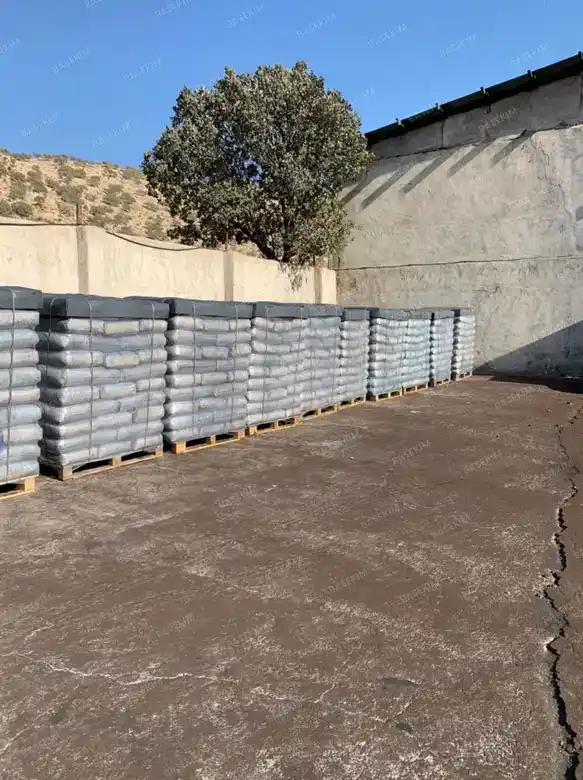
| Packing | 25 kg bags palletized; 1 MT jumbo bags for blending plants. | |
Typical values. The final specification is confirmed in the COA of each shipment.
Related articles
Foundry
Storing and Handling Gilsonite in the Foundry
Good storage keeps gilsonite free-flowing and safe. Jumbo bags can be discharged into silos for automatic dosing. Keep…
Foundry
Bentonite and Gilsonite Blends for Green Sand
Many foundries buy pre-mixed blends of bentonite and carbon additives. Gilsonite is an excellent carbon component for these…

Foundry
Gilsonite in Foundry Sand: How It Works
Green sand moulding is the most common way to make iron castings. Carbonaceous additives are added to the…